How to Choose Custom Speaker Pods for Car Doors
Table of Contents
- Understanding Custom Speaker Pods for Car Doors
- Assessing Vehicle-Specific Speaker Pod Requirements
- Universal Speaker Pods for Cars vs. Custom-Built Options
- Speaker Pod Speaker Size Compatibility and Configuration
- Car Door Speaker Pod Fitment: Materials and Construction
- Critical Safety and Functionality Checks Before Installation
- Working with a Professional Installer for Your Custom Build
- Frequently Asked Questions
Last Updated: October 19, 2026
Understanding Custom Speaker Pods for Car Doors
Custom speaker pods are enclosures built for your vehicle's door panels, holding speakers in a sealed, optimized space that improves sound quality and protects components from moisture and road noise.
A custom speaker pod fits your door perfectly, uses materials matched to your vehicle, and integrates with your existing system without compromising factory features like steering wheel controls or backup cameras.
What Makes a Speaker Pod Custom
A custom speaker pod is built for YOUR car, not an off-the-shelf universal enclosure, matching your door panel dimensions, clearance requirements, and interior finish.
Custom pods offer several advantages:
- Precise fit inside your door opening
- Optimized chamber design for better acoustics
- Protection against moisture and vibration
- Seamless integration with your vehicle's interior
- Support for multiple speaker configurations
Universal pods often leave gaps or require modifications; custom fabrication eliminates those compromises.
Why Door Pods Matter for Sound Quality
Speaker placement directly affects how your audio sounds.
Without a proper enclosure, speakers mounted loosely in doors vibrate against panels, creating buzzing and reducing clarity. A sealed, rigid pod eliminates that.
The door itself becomes part of your audio system when speakers are properly mounted in a pod.
Assessing Vehicle-Specific Speaker Pod Requirements
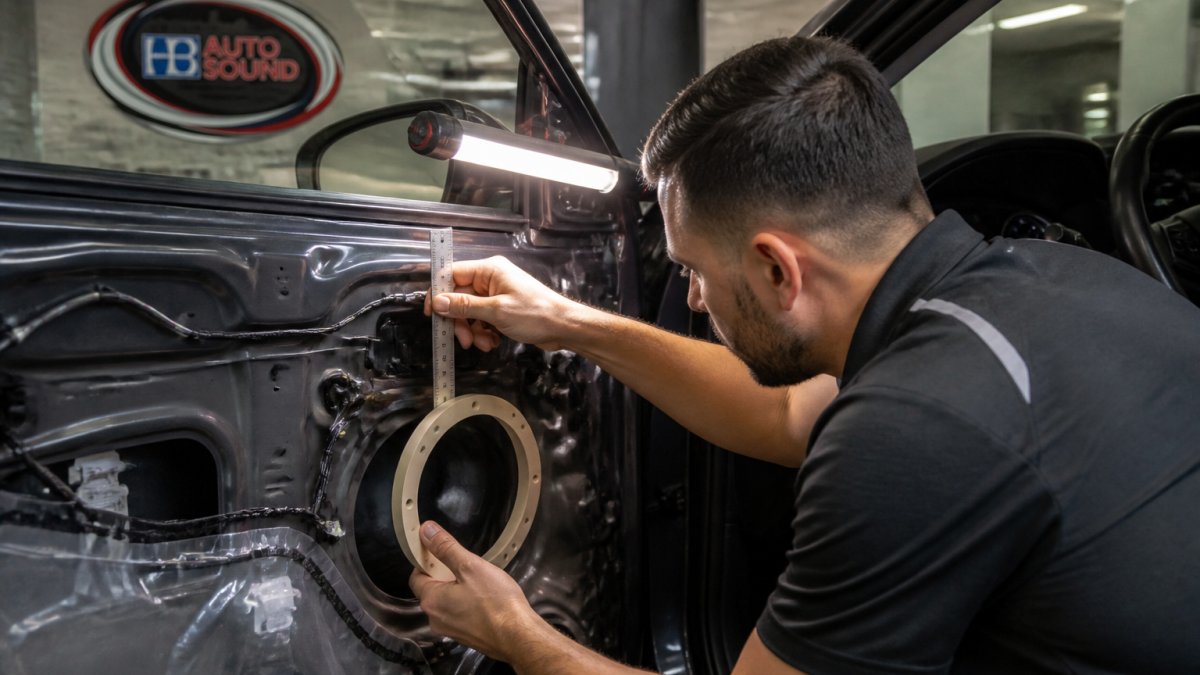
Before choosing a custom speaker pod, measure your door panels and verify clearance. Every vehicle has different dimensions, and a pod that works for a 2015 Honda Civic won't fit a 2020 Ford F-150.
Measuring Your Door Panel Space
Measure the available space inside your door panel with three key measurements:
- Width available, measure the widest point where the speaker will sit
- Depth available, measure from the door's inner surface to any obstacles (like door mechanisms)
- Height available, measure the vertical space for the speaker mounting area
Use a flexible measuring tape or straight edge. Take measurements at multiple points because door panels aren't always perfectly uniform.
Bring these measurements to your installer to verify a pod design will fit before fabrication begins.
Checking Door Clearance and Window Operation
Your speaker pod cannot interfere with window operation or door mechanisms. Before finalizing any design, verify:
- Windows roll up and down smoothly with the pod installed
- Door locks and handles operate normally
- Speaker pods don't block door seal channels
- No wiring harnesses are pinched or damaged
Poor clearance planning causes problems after installation: a pod that blocks a window by a quarter inch becomes a major frustration. Test fit whenever possible before final installation.
Verifying Year, Make, and Model Fitment
Vehicle fitment is critical: a 2018 model may have different door dimensions than a 2019, even if they look identical from outside.
Always specify your exact year, make, and model when discussing speaker pod options, and provide the VIN if possible to confirm factory specifications and options.
Universal Speaker Pods for Cars vs. Custom-Built Options
Both universal and custom speaker pods have a place in car audio. The choice depends on your vehicle, budget, and sound quality goals.
When Universal Pods Work
Universal speaker pods fit many vehicles without custom fabrication, working best when:
- Your vehicle has standard door dimensions
- You want a faster installation
- Budget constraints are a priority
- You're upgrading from factory speakers to aftermarket speakers
Universal pods come pre-made and ready to install. No fabrication time means quicker turnaround. Many vehicles have universal options available that deliver solid results.
However, universal pods often leave small gaps or require minor modifications. They may not seal perfectly against your specific door panel. Sound quality is good, but not optimized.
When Custom Fabrication Is the Better Choice
Custom fabrication delivers superior results when:
- Your vehicle has unusual door panel shapes
- You want maximum sound quality and bass response
- Factory features must be preserved perfectly
- You're building a high-end audio system
- Your vehicle is older or has limited universal pod options
Custom pods seal tightly against your door and use materials matched to your acoustic goals.
Our experience at HB Auto Sound OC shows custom fabrication makes the biggest difference in premium audio builds. When sound quality is your priority, custom is the right choice.
Speaker Pod Speaker Size Compatibility and Configuration
Speaker size determines what drivers fit inside your pod. Common sizes are 4-inch, 6.5-inch, and 8-inch, each with different acoustic properties and mounting requirements.
Common Speaker Sizes: 4-Inch, 6.5-Inch, and 8-Inch Drivers
4-inch speakers work well for tweeters and super tweeters, mounting easily in compact spaces and delivering high-frequency clarity.
6.5-inch speakers are the most versatile size for door pods, fitting most vehicle doors and delivering strong midrange and bass response.
Your vehicle's door space determines which size fits; your audio goals determine which delivers the sound you want.
Single-Speaker vs. Multi-Speaker Configurations
A single-speaker configuration uses one driver per door, keeping things simple and costs lower.
Multi-speaker setups require more complex wiring and careful placement. Tweeters often mount in the door's upper area or A-pillar.
The choice depends on your budget and how critical sound detail is to you. Single-speaker setups deliver excellent results.
Tweeters and Midrange Drivers in Door Pods
Tweeters reproduce high frequencies. Mounting them separately from midbass drivers improves clarity and soundstage width.
Midrange drivers (typically 4-6 inches) bridge the gap between bass and treble.
Proper tweeter and midrange placement requires careful design. Crossovers route the correct frequencies to each driver. Without proper setup, multi-speaker systems sound worse than a single quality driver.
Car Door Speaker Pod Fitment: Materials and Construction
The materials and construction method determine how your pod looks, sounds, and lasts. Two primary materials dominate custom speaker pod fabrication: MDF and fiberglass.
MDF vs. Fiberglass: Trade-Offs and Durability
MDF (Medium-Density Fiberboard) is wood-based material that's affordable and easy to work with.
Fiberglass is lighter, stronger, and naturally moisture-resistant.
Fiberglass drawbacks: higher fabrication cost, requires specialized skills to build properly, and can resonate if not dampened correctly.
Both materials work. MDF is a solid choice for budget-conscious builds.
Sealed vs. Vented Enclosure Design
A sealed enclosure completely isolates the speaker's rear side. Sound only comes from the front of the speaker.
A vented enclosure includes a port that allows some rear-side energy to contribute to the sound.
Sealed pods work better for door mounting because space is limited. Vented designs are more common in subwoofer enclosures.
Interior Finish and Acoustic Dampening
The interior surface of your pod affects sound quality. Bare MDF or fiberglass can reflect sound waves, causing resonance and coloration.
Acoustic dampening material, foam, felt, or specialized absorptive material, lines the interior. This reduces reflections and improves clarity.
Interior finish also affects durability. Sealed, painted interiors resist moisture better.
Critical Safety and Functionality Checks Before Installation
Before your custom speaker pod is installed, verify that it doesn't compromise your vehicle's safety or factory features.
Door Panel Modification Impact on Structural Integrity
Installing a speaker pod may require cutting or modifying your door panel. These modifications must be done carefully to preserve structural integrity.
Check that:
- Door panel cuts don't weaken the panel structure
- All modifications are reversible or professionally sealed
- Wiring channels don't compromise panel rigidity
- The final installation feels solid and doesn't rattle
A properly fabricated pod integrates seamlessly. The door panel should feel as strong after installation as it did before.
Wiring, Routing, and Electrical Safety
Speaker wiring must be routed safely away from electrical systems and moving mechanisms. Poor wiring causes shorts, blown fuses, or fire hazards.
Verify that:
- Wiring is properly insulated and protected
- No wires are pinched by window regulators or door mechanisms
- Power and signal wires are separated to avoid interference
- All connections are soldered or crimped securely
- Fusing is correct for the speaker's power requirements
Professional installation includes proper wiring practices. DIY installations often cut corners here, and that's where problems start.
Ensuring Steering Wheel Controls and Factory Features Still Work
Factory features like steering wheel audio controls, backup cameras, and door sensors must continue working after installation. A poor installation disrupts these systems.
Test before leaving the shop:
- Steering wheel volume and track controls respond correctly
- Backup camera displays and functions normally
- Door locks and windows operate smoothly
- Factory display screens show no error messages
- All factory audio features (Bluetooth, Apple CarPlay, Android Auto) work as expected
Many customer complaints stem from installers who don't verify these details. Professional shops test everything before handing over your vehicle.
Working with a Professional Installer for Your Custom Build
Custom speaker pod fabrication and installation requires expertise. Choosing the right installer makes the difference between a great result and a disappointing one.
What to Expect During the Consultation
A consultation should cover your vehicle, your audio goals, and your budget. The installer should:
- Ask detailed questions about what you want to hear
- Examine your vehicle's door panels and available space
- Discuss speaker size, configuration, and material options
- Explain the fabrication process and timeline
- Show examples of previous work in similar vehicles
- Provide a clear estimate and warranty
Don't rush this step. A good consultation prevents misunderstandings and ensures the final product matches your expectations.
Quality Standards for Custom Fabrication
Quality custom work includes:
- Precise measurements and fit testing
- Sealed, moisture-resistant construction
- Professional wiring and integration
- Acoustic tuning and testing
- Clean interior finish matching your vehicle's trim
- Attention to detail in every aspect
Ask your installer about their process. Request photos of previous builds. Read reviews from past customers. Quality shops have nothing to hide.
Warranty and Support After Installation
Your custom pod should come with a warranty covering workmanship and materials. Understand what's covered:
- Speaker pod structural defects
- Wiring and electrical issues
- Installation quality problems
- Sound quality issues caused by fabrication
A solid warranty gives you confidence.
Choosing the right custom speaker pod for your vehicle requires careful assessment of your space, goals, and budget.
Start by measuring your door panels and understanding your vehicle's specific fitment requirements. Consider whether universal or custom fabrication best matches your needs.
At HB Auto Sound OC, we combine expertise in car audio sales, car audio installation, and custom box and enclosures to deliver a boutique experience tailored to your vehicle and listening preferences.
Frequently Asked Questions
What are custom speaker pods for car doors?
Custom speaker pods are enclosures designed to mount speakers directly into your car door panels, replacing or supplementing factory speaker locations. These pods can be tailored to your specific vehicle's dimensions, door panel shape, and acoustic requirements. A professional fabricator builds them from materials like MDF or fiberglass to fit your exact year, make, and model, optimizing speaker placement for improved sound quality and clean installation without compromising door function or safety.
How do I know which speaker pod fits my car?
Start by identifying your vehicle's year, make, and model, then measure your door panel's available space, including depth and width. Check window clearance and verify that the pod won't interfere with window operation or door locks. A professional installer can assess these factors during a consultation and recommend whether a universal pod or custom fabrication is best for your specific vehicle. This ensures proper fitment without modification issues or safety concerns.
Are vehicle-specific speaker pods better than universal pods?
Vehicle-specific speaker pods are engineered for your exact car's dimensions and acoustics, offering superior fitment, sound quality, and a cleaner look. Universal pods work for some vehicles but may require modifications or compromise acoustics. The choice depends on your vehicle's door panel design, your audio goals, and budget. A professional can evaluate whether your car benefits from a custom build or if a quality universal option meets your needs without unnecessary expense.
What speaker size should I choose for a custom door pod?
Common sizes are 4-inch, 6.5-inch, and 8-inch drivers, each suited to different door spaces and frequency ranges. Smaller drivers fit tight spaces and work well for midrange or tweeter applications. Larger drivers deliver deeper bass and more power but require more door panel space. Your choice should match your vehicle's available clearance, your audio system's configuration, and your desired sound profile. A professional can recommend the optimal size based on your car and listening preferences.
Ready to Upgrade Your Ride?
Call us at (714) 842-1250 or visit us at 16732 Beach Blvd Ste A, Huntington Beach.
Get a Free Quote