
Best Car Speakers for Sound Quality: A 2026 Guide
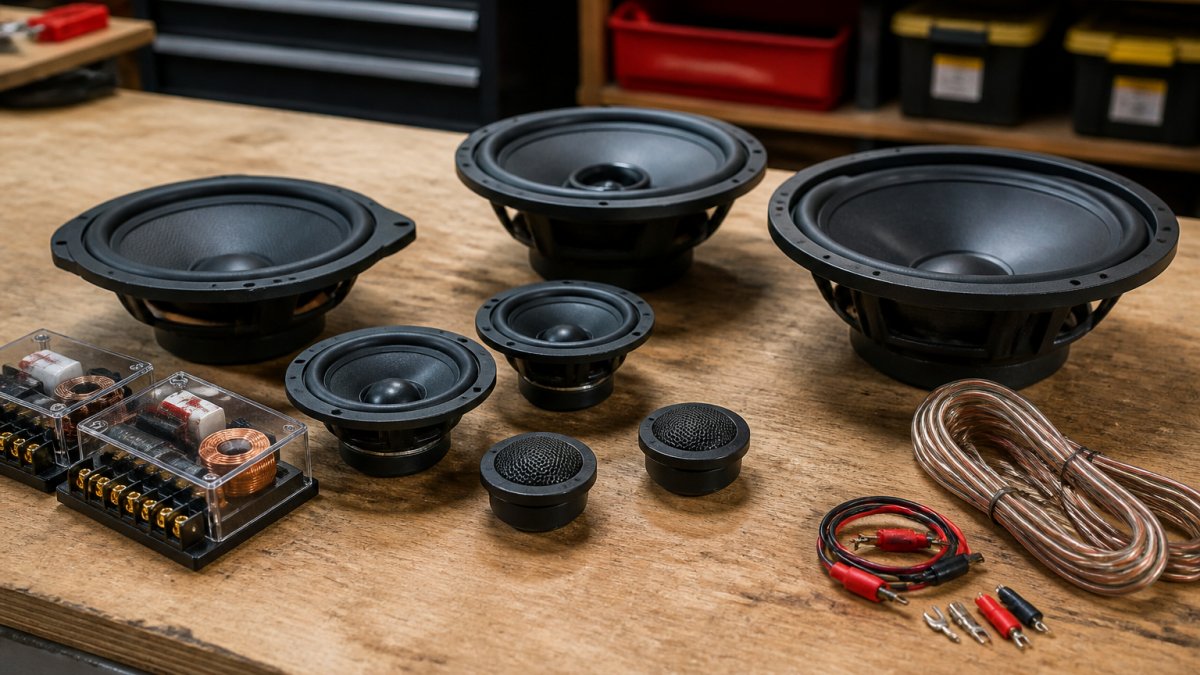
Table of Contents
- What Makes Car Speakers Sound Quality Stand Out
- Component vs. Coaxial Car Speakers: Which Delivers Better Sound
- Best 6.5-Inch Car Speakers for Balanced Performance
- Car Speaker Sensitivity and Power Handling: What You Need to Know
- Car Speaker Installation and Fitment: Getting It Right
- Upgrading from Factory Speakers: What to Expect
- Frequently Asked Questions
Last Updated: October 11, 2026
What Makes Car Speakers Sound Quality Stand Out
The best car speakers deliver sound quality through faithful frequency reproduction, from deep bass to crisp highs without distortion. Factory speakers prioritize cost over acoustic performance, while premium aftermarket options invest in better materials and engineering for accurate, detailed sound.
Speaker materials directly affect sound: soft dome tweeters produce smoother highs than hard plastic, while woofer materials determine midrange and bass clarity. Sensitivity ratings indicate efficiency, higher sensitivity speakers need less power for clean, loud performance.
Installation quality matters as much as the speakers themselves. Improper mounting, bad wiring, or missing sound-deadening material degrade performance significantly.
Component vs. Coaxial Car Speakers: Which Delivers Better Sound
Coaxial speakers combine tweeter and woofer in one unit. Component speakers separate them for optimal placement in your vehicle.
Coaxial speakers offer affordability and simplicity but sacrifice sound quality, the tweeter's proximity to the woofer causes high-frequency interference with midrange output.
Component speakers deliver superior sound by separating drivers into optimal frequency ranges. Tweeters positioned at ear level improve staging and imaging, keeping midrange clean.
The real difference between component and coaxial speakers comes down to priority. Choose coaxial if budget and simplicity matter most. Choose component if sound quality is your primary goal.
Best 6.5-Inch Car Speakers for Balanced Performance
The 6.5-inch size is most common, balancing woofer surface area with door panel constraints. Quality 6.5-inch speakers deliver solid midrange and bass without requiring subwoofers, though many add them for deeper extension.
Prioritize woofer materials (polypropylene or composite for durability), tweeter type (silk or textile for smooth treble), and frequency response range (40 Hz to 20 kHz or wider for complete reproduction).
Balanced performance requires matching sensitivity and power handling to your vehicle's electrical system. An 87 dB speaker plays noticeably louder than an 83 dB speaker on factory head unit power, critical if you're not adding an amplifier.
Sound-deadening material behind door-mounted speakers reduces panel vibration and improves bass response, the mounting environment contributes as much as the speaker itself.
Car Speaker Sensitivity and Power Handling: What You Need to Know
Speaker sensitivity (measured in dB at 1 watt, 1 meter) indicates efficiency. A 90 dB speaker plays 3 dB louder than an 87 dB speaker at the same power. This matters because factory head units produce only 18-25 watts per channel, higher sensitivity maximizes output from limited power.
Power handling (RMS rating) indicates maximum sustained wattage. Exceeding it risks blown drivers; undersizing prevents the speaker from reaching full potential with an amplifier.
Matching Your Vehicle's Electrical System
Determine your head unit's power output (most factory units: 18-25 watts per channel; aftermarket: 50+ watts). Check your owner's manual or manufacturer's website. This directly influences speaker selection.
With 20-watt head unit output, choose 88 dB+ sensitivity speakers for adequate highway volume without distortion. An 83 dB speaker will sound noticeably quieter and force maximum volume, degrading sound quality.
With an amplifier, sensitivity becomes less critical since amps deliver 50-100+ watts per channel. However, higher sensitivity speakers still reduce heat and improve efficiency.
Impedance Compatibility
Most car speakers are 4 ohms. Your head unit or amplifier must support your chosen impedance, mismatches cause poor sound, heat, or damage.
Verify impedance compatibility: check your head unit or amplifier manual for supported impedance. Most support 4 ohms. When in doubt, choose 4-ohm speakers, the industry standard that works with virtually all equipment.
Power Handling and Amplifier Pairing
Match amplifier power to speaker power handling within a reasonable range. For 50-watt speakers, choose a 40-70 watt amplifier for headroom without risk. Without an amplifier, power handling only needs to exceed your head unit's output.
Sensitivity and Real-World Volume
Sensitivity differences compound across a system. A 3 dB increase across all speakers effectively doubles perceived loudness, critical for comfortable listening without maxing volume.
Car Speaker Installation and Fitment: Getting It Right
Proper fitment means secure mounting in the factory location without modification. Common sizes: 6.5 inches (front doors), 6×9 inches (rear), 1-inch tweeters (dash). Incorrect fitment requires costly custom fabrication.
Verifying Speaker Fitment Before Purchase
Before buying speakers, confirm three fitment parameters: size, mounting depth, and wiring compatibility.
Size verification: Measure or identify your factory speaker size. Most vehicles use one of these standard sizes:
- Front doors: 6.5 inches (most common), 5.25 inches, or 6×9 inches
- Rear doors or hatchback: 6×9 inches, 6.5 inches, or 5.25 inches
- Dashboard or pillar: 1-inch, 1.5-inch, or 2-inch tweeters
To find your vehicle's speaker sizes without measuring, search online for your exact year, make, and model plus "speaker size" or "factory speaker specifications." Most vehicle forums and car audio retailers maintain fitment databases. Alternatively, consult your vehicle's owner manual or contact a local car audio shop, they can confirm sizes in minutes.
Mounting depth: Measure from flange to magnet back. Factory panels have 2-3 inches available; aftermarket speakers range 2-4+ inches. Check specs and verify clearance before purchasing.
Wiring compatibility: Factory head units use proprietary connectors. Some vehicles use standard ISO connectors; others use manufacturer-specific plugs (e.g., Bose, Harman Kardon, or Alpine factory systems). If your vehicle has a factory amplifier or integrated audio system, aftermarket speakers may require an interface module to maintain steering wheel controls, backup camera integration, or other factory features. Confirm compatibility before purchasing. Many retailers list fitment information by vehicle; if not listed, contact the retailer or a local installer to verify.
Installation Quality and Sound Impact
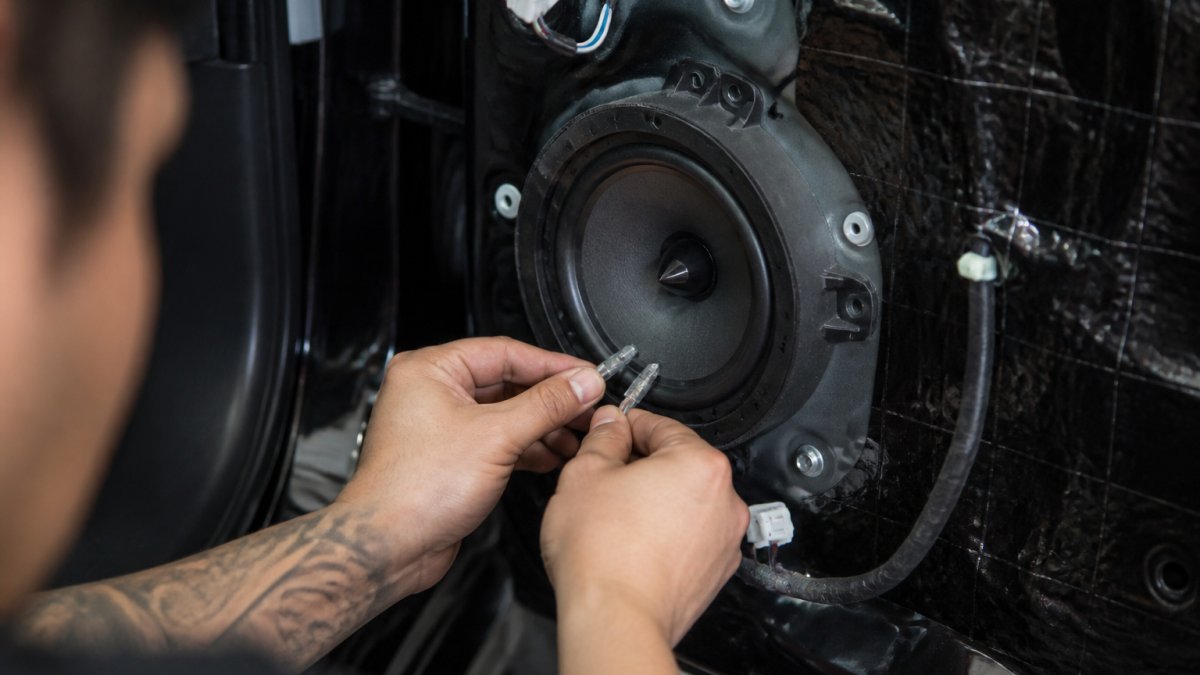
Installation quality directly affects sound quality in measurable ways. Poor mounting allows the speaker to vibrate excessively, creating rattles and muddying the sound. Proper installation includes removing door panels carefully, disconnecting factory speakers, installing mounting brackets if needed, running wiring correctly, and securing the new speaker firmly with all hardware.
Sound-deadening material applied to door panels reduces vibration and improves bass response significantly. A door panel without sound deadening acts as a resonance chamber, amplifying certain frequencies and canceling others. Adding 1/4-inch closed-cell foam or butyl rubber to the inner door panel reduces these resonances, resulting in tighter bass and clearer midrange. This is one of the highest-impact upgrades available.
Wiring quality matters more than many people realize. Factory head units often use thin, shielded wiring prone to signal loss and noise. Upgrading to quality speaker wire (typically 16-14 gauge for door speakers) reduces signal loss and noise. Proper grounding, running a dedicated ground wire from the head unit to the vehicle chassis, prevents hum and buzz. Running positive and negative wires separately (not bundled together) reduces electromagnetic interference. These details seem minor but they compound to improve overall sound quality, particularly at higher volumes.
Installation Challenges by Vehicle Type
Some vehicles present specific installation challenges that affect cost and complexity.
Factory-integrated audio systems: Vehicles with Bose, Harman Kardon, Bang & Olufsen, or other premium factory systems often include a factory amplifier integrated into the trunk or under a seat. Upgrading speakers in these vehicles requires either:
- An interface module that allows aftermarket speakers to work with the factory amplifier
- Replacing the factory head unit with an aftermarket unit that supports your speakers directly
- A complete system upgrade including new head unit, amplifier, and wiring
The least expensive option is often the interface module, but it may not fully unlock the potential of premium aftermarket speakers because the factory amplifier has limited power and tuning flexibility.
Vehicles with backup cameras or steering wheel controls: Factory integration of these features requires a head unit that supports them or an interface module. Losing these features during an upgrade is a common concern. Professional installers routinely preserve factory functionality using compatible head units or interface modules.
Vehicles with limited door panel space: Some compact or luxury vehicles have minimal space behind door panels. Speakers with deep mounting profiles won't fit. In these cases, you may need to choose shallower speakers (which limits options) or have an installer modify the door panel.
Realistic Installation Costs
Speaker installation costs vary by vehicle complexity and installer expertise. Total installed cost for a quality front-speaker upgrade with sound deadening typically ranges depending on speaker choice and vehicle.
Total installed cost for a quality front-speaker upgrade with sound deadening typically ranges from $600-$1,500 depending on speaker choice and vehicle. This is why installation quality matters: a poorly installed $400 speaker system may sound worse than a well-installed $300 system in the same vehicle.
Installation Best Practices
If you're installing speakers yourself, follow these steps:
- Disconnect the negative battery terminal to prevent electrical shorts.
- Remove door panels carefully using a panel removal tool to avoid breaking clips.
- Disconnect factory speakers and remove mounting brackets if reusable.
- Install mounting brackets for your new speakers if required (many aftermarket speakers use factory mounting holes).
- Run speaker wires from the head unit to the door, keeping them away from power wires to reduce interference.
- Connect speakers using quality connectors (solder or crimp terminals, not wire nuts).
- Secure the speaker firmly with all mounting hardware; loose speakers rattle.
- Apply sound-deadening material to the door panel before reinstalling it.
- Test the system before reassembling everything.
If any step feels uncertain, professional installation is worth the cost. Poor wiring, loose mounting, or incorrect connections degrade sound quality and risk equipment damage.
Upgrading from Factory Speakers: What to Expect
Factory speakers prioritize cost over sound quality. Most are plastic-coned woofers paired with tiny tweeters, mounted in locations that aren't acoustically optimal. They're engineered to be acceptable for average listeners, not to deliver reference-level sound.
When you upgrade to the best car speakers, the improvement is noticeable immediately. Vocals become clearer. Instruments separate better. Bass tightens and extends deeper. Treble becomes smooth instead of harsh. The overall listening experience feels more engaging and enjoyable. Many buyers report that they discover details in familiar songs they'd never heard before.
Realistic expectations matter. Upgrading speakers alone won't produce the same results as a complete system upgrade with amplifier, subwoofer, and sound-deadening treatment. Speakers are the foundation, but other components amplify their benefits. A quality amplifier delivers cleaner power. A subwoofer extends bass response. Sound-deadening material reduces panel vibration and improves bass definition.
The path to better sound is gradual for many enthusiasts. Start with quality speakers. Add an amplifier next if budget allows. Add a subwoofer for bass extension. Apply sound-deadening material throughout. Each upgrade builds on the previous one. This staged approach spreads cost while continuously improving the listening experience.
One thing nobody tells you about upgrading is how much the vehicle environment affects sound. Road noise, engine noise, and wind noise at highway speeds mask detail. Sound-deadening material helps but doesn't eliminate these factors. This is why serious car audio enthusiasts invest in comprehensive treatments rather than speakers alone.
Upgrading your car's audio system transforms your daily drive. Better speakers deliver clearer vocals, tighter bass, and more detailed sound across all music genres. The listening experience becomes genuinely enjoyable instead of merely functional. At HB Auto Sound OC, our certified installers specialize in professional car speaker installation and custom audio fabrication.
Frequently Asked Questions
Are component speakers better than coaxial speakers for sound quality?
Component speakers separate tweeters from woofers, allowing each to handle specific frequency ranges without interference. This separation produces clearer vocals, refined treble, and better sound staging compared to coaxial speakers, where both drivers share the same mounting point. Coaxial speakers are more compact and budget-friendly, but component systems deliver noticeably superior sound quality for music lovers who prioritize clarity and imaging.
Will replacing factory speakers improve sound quality?
Factory speakers are typically designed for cost efficiency rather than audio performance. Upgrading to aftermarket speakers with better tweeter materials (silk or textile blend), improved woofer construction, and higher sensitivity ratings will deliver noticeably clearer vocals, smoother treble, and more balanced bass. The improvement depends on your vehicle's factory system integration, professional installation ensures you maintain steering wheel controls and backup camera functionality while maximizing sound quality gains.
How do I choose car speakers that fit my vehicle?
Speaker fitment depends on your vehicle's door size and mounting depth. Common sizes include 6.5-inch, 5.25-inch, and 6x9-inch speakers. Check your vehicle's specifications or consult with a professional installer to confirm available space and mounting options. Some vehicles have integrated factory systems requiring custom brackets or enclosures. Professional installation ensures proper fitment, correct wiring integration, and optimal sound staging without rattling or clearance issues.
What is speaker sensitivity and why does it matter?
Speaker sensitivity measures how loud a speaker plays at a given power level, measured in decibels (dB). Higher sensitivity ratings (typically 85-90 dB or above) mean the speaker requires less power to achieve the same volume, making it more efficient. This matters because efficient speakers sound clearer at moderate volumes and reduce strain on your vehicle's electrical system. When choosing speakers, match sensitivity and power handling ratings to your head unit or amplifier for balanced performance and distortion-free listening.
Ready to Upgrade Your Ride?
Call us at (714) 842-1250 or visit us at 16732 Beach Blvd Ste A, Huntington Beach.
Get a Free Quote