Beach Auto Sound: Choosing the Right Car Audio Upgrade
Last Updated: November 17, 2026
Quick Summary
The right car audio upgrade depends on how you drive, what vehicle you have and what you want to hear. Most upgrades fall into good, better or best tiers, starting with the weakest link, like front speakers and a head unit that supports your phone. A consultation before any component is recommended helps match the system to your needs.
- Most car audio upgrades fall into three tiers: good, better and best.
- A good upgrade usually means new front speakers and a head unit that supports your phone.
- A better upgrade adds component speakers, an amplifier and sometimes a compact subwoofer.
- Head unit changes make sense when the stock radio cannot support modern phone connections or needed inputs.
- Confirm that a head unit matches your vehicle's steering wheel interface before buying.
Table of Contents
- What a Good, Better, Best Car Audio Upgrade Looks Like
- Factory Stereo Upgrade: When Replacing the Head Unit Makes Sense
- Car Speaker Upgrade Options and What Each Tier Delivers
- Car Audio Brands and How We Select Lines for Reliability
- What Professional Car Audio Installation Includes
- Pros and Cons of Each Upgrade Path
- Book a Consultation to Match Your Vehicle and Listening Habits
- Frequently Asked Questions
What a Good, Better, Best Car Audio Upgrade Looks Like
Most car audio upgrades fall into three tiers: good, better and best. Each tier solves a different problem, and the right one depends on how you drive, what your vehicle is and what you want to hear. We start every consultation by asking how the car is used before we recommend a single component. That order matters more than any spec sheet.
A good upgrade replaces the weakest link. Usually that means new front speakers and a head unit that supports your phone's connection standards.
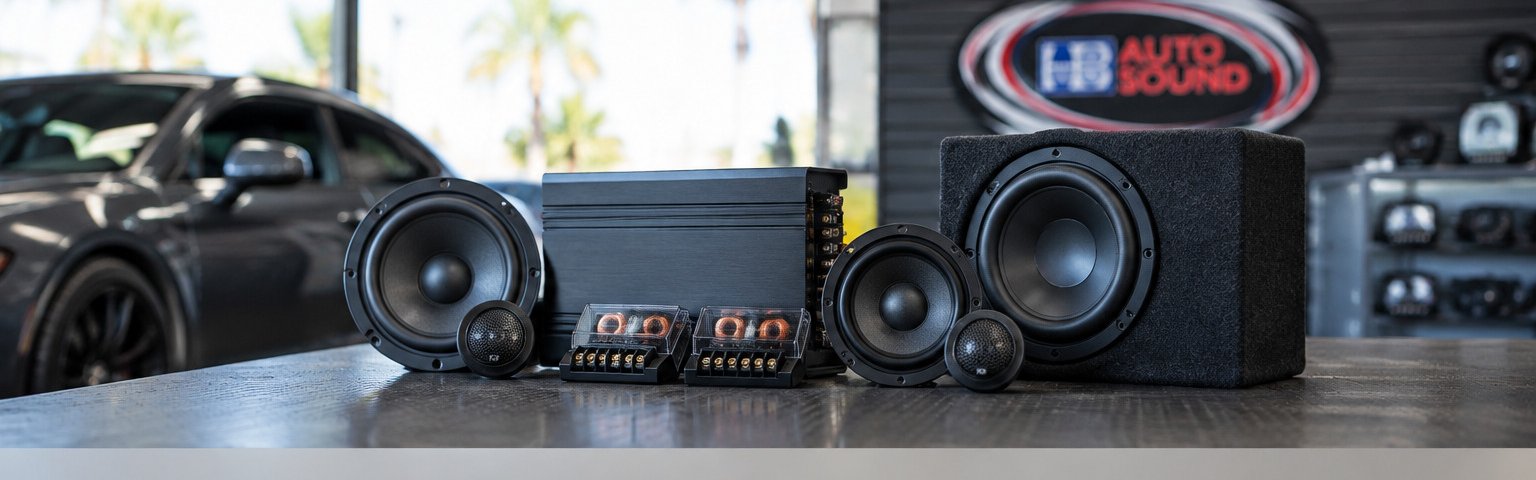
A better upgrade adds power and control. This tier typically includes higher-quality component speakers, an amplifier to drive them properly, and sometimes a compact subwoofer.
A best upgrade treats the vehicle as a complete listening room. It can include a full component system, a properly matched amplifier and subwoofer in a custom enclosure, sound-deadening material, and processing tuned to the cabin.
| Tier | Typical Components | Best For |
|---|---|---|
| Good | Head unit, front speakers | Daily driving and a clear factory-plus improvement |
| Better | Component speakers, amplifier, compact subwoofer | Drivers who want fuller sound and more volume |
| Best | Full component system, custom enclosure, tuned processing | Enthusiasts and anyone chasing reference-level sound |
Factory Stereo Upgrade: When Replacing the Head Unit Makes Sense
Replacing the head unit is often the first step, but it is not always the right one. We recommend a head unit change when the stock radio cannot handle modern phone connections, lacks the inputs you need, or when you want to add a backup camera or steering wheel control integration.
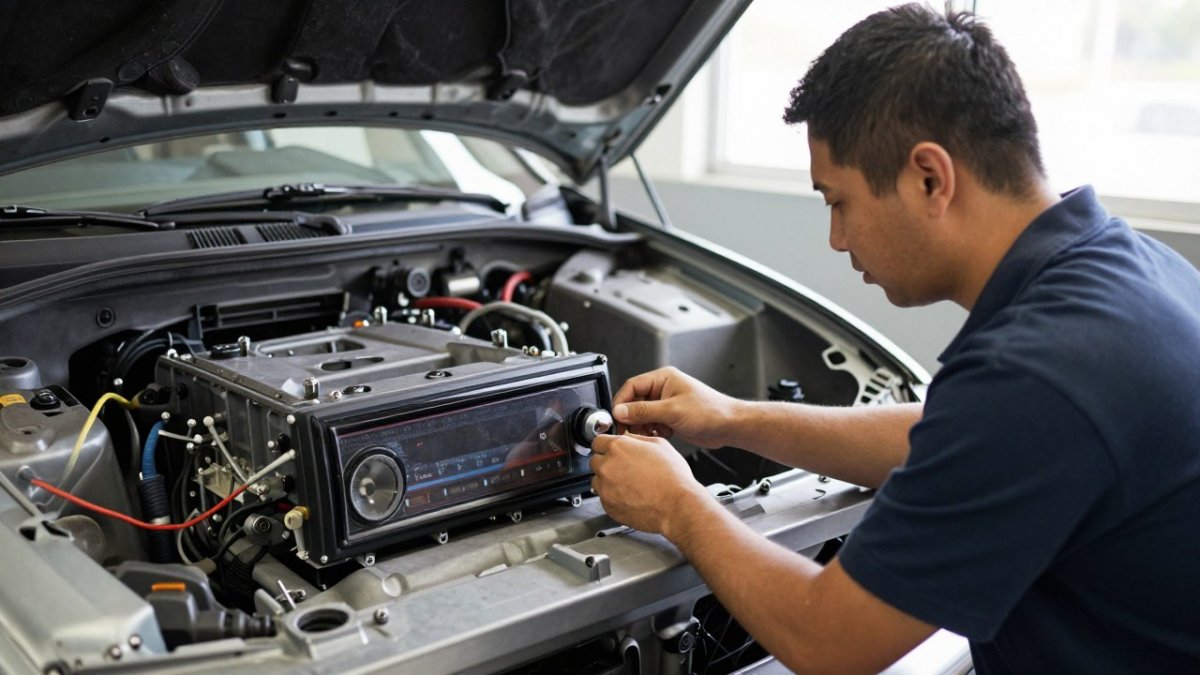
On many late-model vehicles, the factory radio ties into the backup camera, climate display and steering wheel controls. A head unit that ignores those connections can leave you with a dead button or a missing camera feed.
Watch out: a head unit that is not matched to your vehicle's steering wheel interface can leave the buttons dead, even when the radio itself works perfectly. Ask for the wiring interface to be confirmed before the unit is bought.
Car Speaker Upgrade Options and What Each Tier Delivers
Factory speakers are typically small, paper or composite cones mounted in thin door panels.
At the good level, we usually recommend a quality coaxial speaker for the front doors.
At the better level, component speakers separate the woofer and tweeter.
Car Audio Brands and How We Select Lines for Reliability
Brand choice matters, but the badge on the box does not decide the outcome. We curate a focused lineup instead of stocking every label on the market.
The four filters we run before a line earns shelf space
- Long-term reliability. We select lines for reliability.
- Customer satisfaction after the sale. We select lines for customer satisfaction.
- Real-vehicle integration. We consider how each line integrates with factory systems.
- Value at each tier. We stock a good, better and best option at every level.
Why authorized-dealer status is part of the recommendation
Authorized-dealer status matters because it means the equipment is genuine and supported under the manufacturer's warranty. Gray-market gear bought online can look identical and still be refused for warranty service, and some manufacturers will not honor coverage on products sold outside their authorized channel. When we recommend a line, we can stand behind the warranty path because we are in it.
What this means when you are comparing online
If you are comparing brands online, you will see dozens of options at similar price points and spec sheets that look nearly identical. Specs tell you what a component can do on a test bench; they do not tell you how it behaves in your vehicle, how it integrates with your factory system, or how the manufacturer treats a claim two years in. We would rather recommend two or three lines we trust, and explain why each one fits your vehicle and listening habits, than hand you a long list we cannot stand behind.
Our job is to match the component to the vehicle, the factory system and the way you actually listen, then let you choose the tier that fits your priorities.
What Professional Car Audio Installation Includes
Professional installation is where vehicle-specific details decide whether factory features survive the upgrade.
Step 1: Vehicle-specific compatibility check before anything is ordered
Before we quote a system, we confirm how the factory audio ties into the rest of the vehicle. On many late-model cars the radio is part of a network that also runs the backup camera, climate display, steering wheel controls, warning chimes and, in some cases, driver-assistance alerts. A head unit that ignores those connections can leave you with a dead button, a missing camera feed or a warning tone that no longer plays.
Step 2: Power, ground and signal routing
A clean install starts with the right wiring. Power and ground connections need to be sized for the amplifier, routed away from interference and secured properly. Sloppy grounds are a common source of noise and can damage components over time. Signal cables run on the opposite side of the vehicle from power cable where possible, and every connection is fused and protected.
Step 3: Speaker mounting and sound treatment
Speaker mounting is the next priority. Adapters and baffles should fit the door without stressing the panel, and wiring should be protected from moving parts. Rattles and loose trim are often caused by installation shortcuts rather than the speakers themselves. Where the build calls for it, sound-deadening material on the doors and panels reduces resonance so the speakers can produce their intended output.
Step 4: Setup and tuning
Finally, the system should be set up and tuned. That includes gain settings, crossover points and time alignment where the components support it. A technically complete install that is never tuned will still sound underwhelming, the equipment is only as good as the calibration behind it.
What to expect on timing and aftercare
Watch out: a shop that quotes an installation without first confirming your vehicle's factory integration points is guessing. Ask which interfaces and adapters the quote includes before you approve the work.
Pros and Cons of Each Upgrade Path
Each upgrade path has trade-offs, and the right choice depends on your priorities.
Good upgrade
- Pros: Lowest cost, fast installation, clear improvement over factory sound
- Cons: Limited bass and volume, no major change in soundstage
Better upgrade
- Pros: Fuller sound, more power, room to grow with additional components later
- Cons: Requires careful planning for power and mounting, higher total cost
Best upgrade
- Pros: Custom fit for your vehicle
- Cons: Largest investment, longer installation time, more decisions to make
Choosing a tier is less about the most expensive option and more about matching the system to your vehicle and habits. A daily commuter may be well served by a good or better build, while a weekend enthusiast may want the full custom approach. Pricing depends on the vehicle and the parts selected, so request a quote after reviewing your specific car. Our installation cost guide explains what typically goes into the final figure.
Book a Consultation to Match Your Vehicle and Listening Habits
Choosing the right upgrade is easier with a clear plan. At HB Auto Sound OC, we review your vehicle, your listening habits and your budget, then recommend the right components for the way you drive. You can book a car audio consultation to talk through your options, or visit our installation services page to see what we handle in-house.
When you are ready to move forward, contact our team to schedule your appointment.
Frequently Asked Questions
Is professional car stereo installation worth it?
For most upgrades, yes. Ask any shop to show you how they will retain factory features such as backup cameras and climate displays before you commit, and ask what their workmanship warranty covers.
Can I upgrade my factory car speakers without replacing the stereo?
Yes, in many vehicles. Component or coaxial speakers can often be installed in existing locations, sometimes with adapter brackets and wiring harnesses. Whether the factory head unit can drive better speakers depends on its built-in amplifier. If the sound stays thin at higher volume, adding an amplifier or upgrading the head unit usually gives the best improvement.
How do I choose a car audio specialist?
Look for a shop that asks how you use your vehicle before recommending equipment, explains the difference between good, better and best options, and checks compatibility with your specific make and model. Ask about installer experience, workmanship warranties and what happens if an issue appears after the job. Reviews that describe clean installations and follow-up support are a useful signal.
What should I ask before booking a car audio installation?
Ask whether the installer will keep steering wheel controls, backup cameras and factory chimes working, which harness and adapter parts they use, and how they handle wire routing and grounding. Confirm the warranty on both parts and labor, and ask for a written quote that explains what is included. Pricing depends on the vehicle, the equipment chosen and the amount of work, so request a quote for your specific setup.

Ready to Upgrade Your Ride?
Call us at (714) 842-1250 or visit us at 16732 Beach Blvd Ste A, Huntington Beach.
Get a Free Quote