Performance Car Audio: How Do You Build a System That Sounds Right?
Last Updated: October 28, 2026
Quick Summary
Performance car audio is clean, accurate sound that holds up at real listening volumes inside a moving vehicle, not simply loud sound. A good system balances detail in the vocals, tight bass, and a centered soundstage. Plan the whole system first, then buy in stages.
- Plan the full system first, then buy in stages to avoid costly rework.
- Set amplifier gain by measurement, not by ear, to prevent clipping.
- Run amplifiers at 80 to 90 percent of rated power to keep sound clean.
- Give the subwoofer its own amplifier channel and proper crossover settings.
- Choose a Good, Better, or Best tier based on your listening goals and budget.
Table of Contents
- What Performance Car Audio Actually Means
- Where to Start: Head Unit or Speakers First
- Matching Speakers and Amplifiers for Clean Output
- Adding a Subwoofer Without Compromising Your Cabin
- Budget Tiers: Good, Better, and Best Builds
- Fitment, Wiring, and Why Installation Matters
- Booking Your Consultation at HB Auto Sound OC
- Frequently Asked Questions
What Performance Car Audio Actually Means
Performance car audio is about getting clean, accurate sound that holds up at real listening volumes inside a moving vehicle. It is not simply about being loud. A well-built system delivers detail in the vocals, tight and controlled bass, and a soundstage that feels centered on the dashboard.
At HB Auto Sound OC, we start every build by asking what the listener actually wants to hear. Some drivers want crisp podcasts on a commute. Others want a bass-heavy mix on the weekend. Those goals call for different component choices, and a good system balances them rather than maxing out one.
Where to Start: Head Unit or Speakers First
Our advice is to plan the whole system first and then buy in stages. Pick the head unit that will support the amplifier and speakers you plan to install in two or three years, not just the one that fits your budget today.
Matching Speakers and Amplifiers for Clean Output
Watch the signal chain.
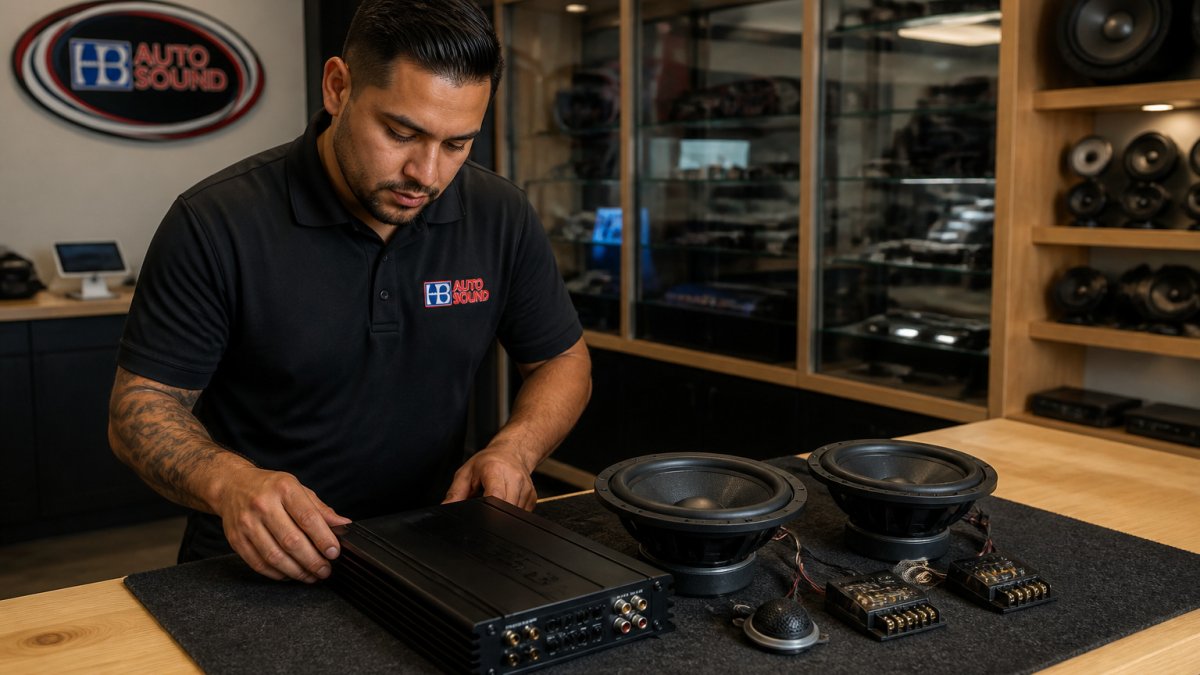
Leave headroom. A system running at 80 to 90 percent of its rated power most of the time will sound cleaner and last longer than one pinned at 100 percent. That headroom is what separates a system that sounds good on a test drive from one that still sounds good two years later.
Adding a Subwoofer Without Compromising Your Cabin
Bass needs a dedicated amplifier channel and proper crossover settings so the subwoofer handles only low frequencies. Without that, the sub can muddy the midrange and make the whole system sound worse.
Budget Tiers: Good, Better, and Best Builds
We organize builds into three tiers so you can see where your money does the most work.
- Good: Quality replacement speakers and a well-matched head unit. This tier delivers a clear, noticeable improvement over factory sound for drivers who want better everyday listening.
- Better: Adds a dedicated amplifier to power the speakers and a subwoofer for low-end depth. Most drivers who want a true upgrade land here.
- Best: A full system with component speakers, a multi-channel or dedicated amplifiers, a tuned subwoofer enclosure, and professional tuning. This tier suits drivers who want a detailed, room-filling sound.
We recommend components based on the vehicle, intended use, and consumer preferences, using select lines chosen for reliability and customer satisfaction.
Here is how the three build tiers compare, so you can see where your money does the most work.
| Tier | What it includes | Best for |
|---|---|---|
| Good | Quality replacement speakers and a well-matched head unit | Clear, noticeable upgrade over factory sound |
| Better | Dedicated amplifier plus a subwoofer for low-end depth | Drivers wanting a true upgrade |
| Best | Component speakers, dedicated amplifiers, tuned sub enclosure, professional tuning | Detailed, room-filling sound |
Fitment, Wiring, and Why Installation Matters
Tuning is the final install step. A system that is wired correctly still needs its gains, crossovers, and equalization set for the cabin. Crossovers should send low frequencies to the subwoofer, midbass to the door speakers, and highs to the tweeters, with overlap kept minimal so the system does not muddy. A DSP makes that easier, but even a basic system benefits from setting crossovers and gain by measurement rather than by ear. That final step is where a system goes from loud to balanced.
Booking Your Consultation at HB Auto Sound OC
Every build starts with a conversation. At HB Auto Sound OC, we review your vehicle, listening habits, and budget, then recommend the components and tier that fit. You can see the full range of installation services we offer, or request a free quote to get started.
Frequently Asked Questions
What makes a car audio system high performance?
A high-performance system is defined by how well its parts work together, not by any single component. Speakers need clean power from an amplifier sized to their RMS rating, and the head unit must send a clean signal. Our team at HB Auto Sound OC recommends components based on the vehicle, intended use, and consumer preferences.
Do I need an amplifier for upgraded car speakers?
Many aftermarket speakers sound noticeably better with an amplifier because factory head units typically deliver only a few watts of RMS power per channel. Speakers rated for higher power can distort or sound thin when underpowered. An amplifier gives the speakers the control and volume headroom they need. The right amplifier depends on the speaker's RMS rating, your vehicle's electrical system, and the sound you want, so it is worth matching them together.
Can I upgrade my factory car stereo without replacing the head unit?
In many vehicles you can, by adding speakers, an amplifier, or a sound processor that works with the factory radio. Some newer vehicles tie climate, backup camera, and steering wheel controls into the factory head unit, so a direct swap can cause problems.
Ready to build a system that sounds right in your vehicle? Get in touch with HB Auto Sound OC for a consultation, and we will help you choose the right tier and components for how you actually drive and listen.

Ready to Upgrade Your Ride?
Call us at (714) 842-1250 or visit us at 16732 Beach Blvd Ste A, Huntington Beach.
Get a Free Quote