How to Choose the Best Car Alarm for a Truck
Last Updated: November 2, 2026
Quick Summary
The best car alarm for a truck depends on how and where you use it, since trucks carry tools and gear that thieves target alongside the vehicle. A shock sensor covers most threats like window smashing and door tampering, while a tilt sensor adds protection against jacking or towing. Choosing between entry, mid, and upper tiers should start with your truck's wiring and how you use it.
- A shock sensor reacts to impact or vibration and covers the most common break-in threats.
- A tilt sensor reacts to angle changes, making it useful against jacking or towing.
- Trucks parked for long periods in public areas often benefit from tilt detection.
- Immobilizers stop the engine from starting without the correct key or fob.
- Have a professional confirm your truck's model year and wiring before buying a system.
Table of Contents
- What Makes a Truck Different From a Car for Alarm Protection
- Shock Sensor or Tilt Sensor: Which Truck Alarm Fits Your Risk
- Viper vs. Compustar Car Alarm: How the Two Compare for Trucks
- Features That Matter Most: Immobilizers, GPS Tracking, and Smartphone Alerts
- Protecting Tools and Gear Inside the Truck Cab
- Professional Truck Alarm Installation: What to Expect
- Booking Your Truck Security Consultation at HB Auto Sound OC
- Frequently Asked Questions
What Makes a Truck Different From a Car for Alarm Protection
Trucks face a different theft profile than sedans, so the right car alarm for a truck is not always the best choice for a sedan. Pickups and SUVs often carry tools, gear, and equipment that thieves target as much as the vehicle itself. At HB Auto Sound OC, we spend a lot of time matching alarms to the actual vehicle and how it gets used, because a one-size-fits-all approach leaves gaps.
A truck's height, cargo bed, and open cab mean more entry points and more things to protect. A purpose-built alarm should account for those differences from the start.
Shock Sensor or Tilt Sensor: Which Truck Alarm Fits Your Risk
Most car alarm for a truck models use either a shock sensor or a tilt sensor to detect a break-in. A shock sensor reacts to impact or vibration, such as someone hitting the door or rocking the truck. A tilt sensor reacts when the vehicle's angle changes, such as when a thief jacks it up or tows it.
For most owners, a shock sensor covers the most common threats, including window smashing and door tampering. Trucks parked on lots or in exposed driveways may also benefit from tilt detection. Our recommendation depends on where you park, how you use the truck, and what you carry in the bed.
When a Truck Alarm With Tilt Sensor Makes More Sense
A truck alarm with tilt sensor earns its place when the vehicle is at higher risk of being lifted or towed. Owners who leave a truck parked for long stretches in public areas often fall into this group. It also suits trucks that haul trailers or sit on unlevel ground, where sensitivity needs careful adjustment to limit false alarms.
Viper vs. Compustar Car Alarm: How the Two Compare for Trucks
For a truck, the comparison should not stop at brand reputation. It should start with how each line handles your cab configuration, your model year, and the accessories you already run.
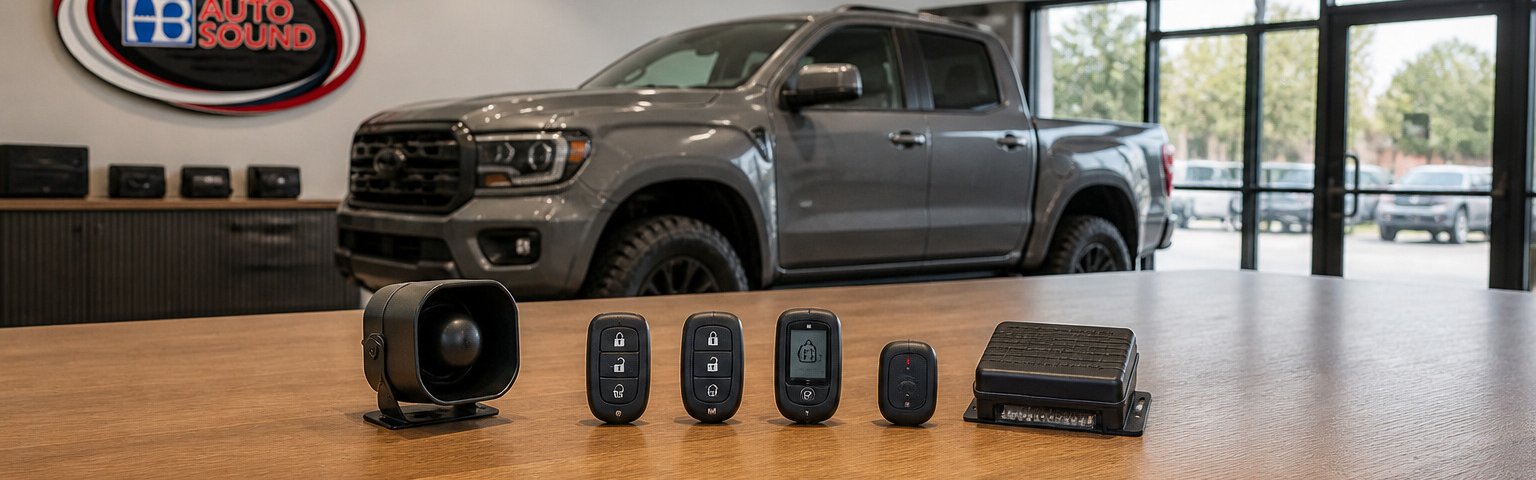
- Good (entry tier): shock sensor, door and hood triggers, siren, and keyless entry. This covers smash-and-grab and door tampering on most trucks.
- Better (mid tier): adds two-way remote, tilt or motion sensing, and interior protection. This suits trucks parked in exposed lots or carrying tools in the cab.
- Best (upper tier): adds GPS tracking, smartphone alerts, and immobilizer integration. This fits high-value work trucks, tow rigs, and vehicles that sit unattended for long stretches.
A proper comparison starts with your truck's wiring, your existing accessories, and how you plan to use the alarm day to day. Our guide to car audio specialists explains how specialists evaluate these factors and choose equipment for a given vehicle and use.
Truck wiring varies widely by model year and trim. Have the system checked against your specific vehicle before buying. Our car alarms and security team can help you compare options and recommend the configuration that fits your truck and how you use it.
The table below sums up how the entry, mid, and upper tiers differ so you can match a tier to your truck and how you use it.
| Tier | Key features | Best for |
|---|---|---|
| Good (entry) | Shock sensor, door and hood triggers, siren, keyless entry | Smash-and-grab and door tampering on most trucks |
| Better (mid) | Two-way remote, tilt or motion sensing, interior protection | Trucks in exposed lots or carrying tools in the cab |
| Best (upper) | GPS tracking, smartphone alerts, immobilizer integration | High-value work trucks, tow rigs, long unattended parking |
Features That Matter Most: Immobilizers, GPS Tracking, and Smartphone Alerts
Beyond detection, a few features make a real difference for trucks. An immobilizer prevents the engine from starting without the correct key or fob, which helps against key-theft and hot-wiring attempts. GPS tracking supports vehicle recovery if the truck is taken. Smartphone alerts notify you of activity in real time, so you can respond quickly.
Prioritize the features that match your situation. A truck used on job sites may need tracking more than a truck that stays in a garage.
Protecting Tools and Gear Inside the Truck Cab
Many truck thefts are really about what's inside. Tools, electronics, and equipment can be worth more than the truck's accessories. Layered security helps here: an alarm with a motion or interior sensor can detect someone reaching into the cab, while a shock sensor covers the exterior. Securing gear in locked boxes and using visible deterrents such as a siren or flashing lights add another layer.
Professional Truck Alarm Installation: What to Expect
Professional installation is worth considering for most truck owners, but what actually happens during the install matters more than the label.
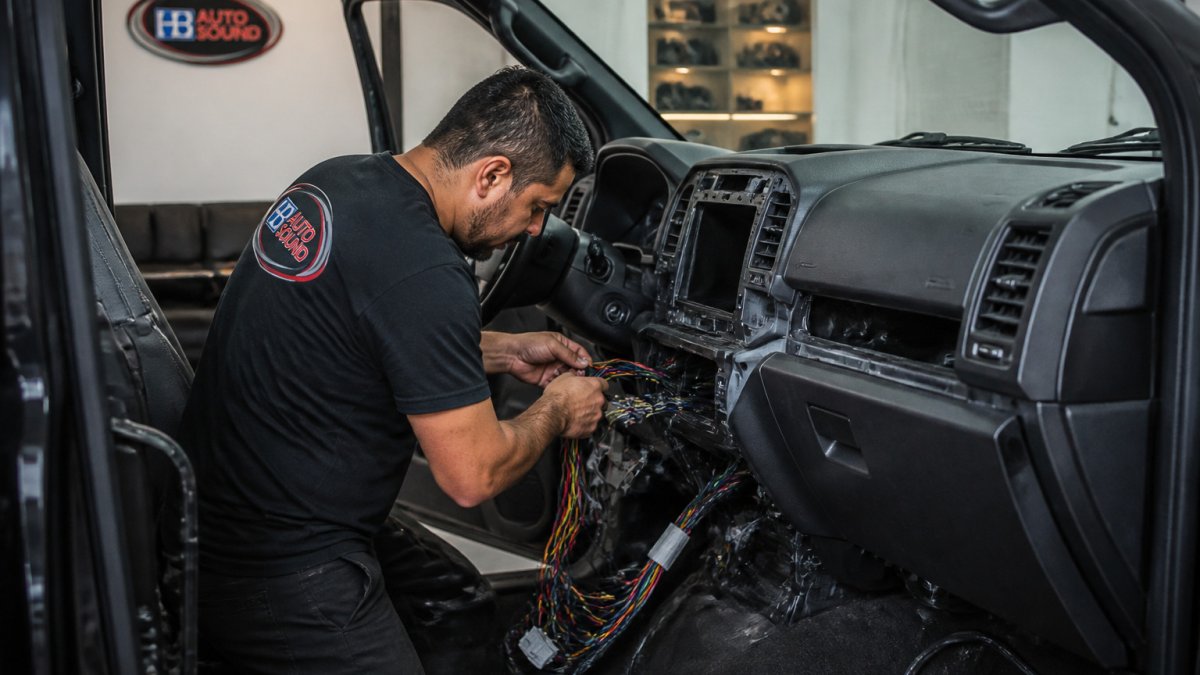
Vehicle inspection and interface check. The installer should confirm your truck's model year, trim, and data-bus architecture before choosing an interface module. Newer trucks with push-to-start and factory remote start often need a vehicle-specific interface, while older trucks may use a more direct wiring approach.
Sensor placement. Shock sensors are typically mounted to the vehicle body where they can pick up impact without being overly sensitive to road vibration. Tilt sensors need to be mounted level and calibrated to the truck's resting angle, especially if the truck sits on unlevel ground or carries a load that changes its stance. Interior motion sensors should be placed to cover the cab without being blocked by cargo or seat covers.
Wiring and routing. Clean wiring means fused connections, proper grommets through the firewall, and routing away from heat and moving parts. On trucks, the bed and tailgate area may need additional protection if you carry tools or gear, which can mean adding a tailgate trigger or bed sensor during the same install.
Testing and sensitivity setup. The installer should test every trigger, confirm the siren and lights work, and adjust sensitivity with you present. A common pattern is to set sensitivity too high, which leads to false alarms from wind, passing traffic, or temperature changes. Ask for a walkthrough of how to adjust sensitivity yourself.
Walkthrough and follow-up. Expect a demonstration of the remote, smartphone app, and any tracking features, plus a clear explanation of warranty and follow-up service. Ask about the installer's experience with your truck model and how they handle warranty claims.
If you are comparing installation options, a consultation is the fastest way to narrow the choice. Our car alarms and security team can review your vehicle, how you use it, and what you need to protect, then recommend a setup that fits.
Booking Your Truck Security Consultation at HB Auto Sound OC
If you're deciding between alarm options for your truck, a consultation is the fastest way to narrow the choice. Our team can review your vehicle, how you use it, and what you need to protect, then recommend a setup that fits. Visit hbautosoundoc.com to learn more about our car alarm and security services.
Frequently Asked Questions
What is the best car alarm out there?
No single alarm fits every vehicle. The right choice depends on how the truck is used, whether it has a factory security system, and how much protection you need. A professional consultation helps match the system to your truck, your tools, and your daily routine.
What's better for a truck, Viper or Compustar?
The better fit depends on your truck and goals. Have a qualified installer confirm compatibility before you buy.
Can I add an alarm to a truck with a factory security system?
Whether an alarm can be added depends on your truck's electrical layout, so have an installer check it first.
Should a truck alarm include a tilt sensor or shock sensor?
A shock sensor detects impacts such as a window being broken or a bump against the vehicle, while a tilt sensor detects a change in the truck's angle, such as someone lifting one end to tow it. Many owners choose a system with both. Tilt sensors are especially useful for trucks that are often parked on slopes or in areas where towing theft is a concern.

Ready to Upgrade Your Ride?
Call us at (714) 842-1250 or visit us at 16732 Beach Blvd Ste A, Huntington Beach.
Get a Free Quote